
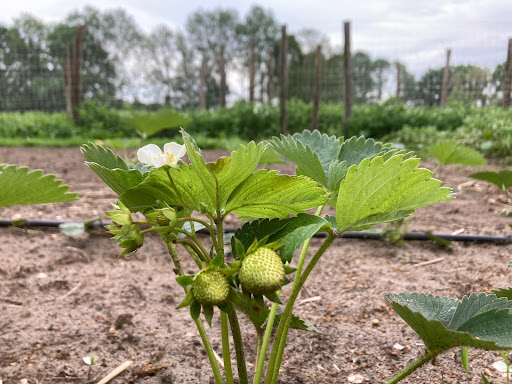
At De Tovertuin in Epe, visitors pick their own organic vegetables from a large selection grown on-site. The farm operates on a membership basis, with space for new members each season. The growing season typically runs from early May until the end of autumn, though exact dates depend on weather and crop availability.
You pay by the kilo for what you harvest. Members have access to the fields on Saturdays from 08.00 to 20.00, while non-members can visit on Tuesdays, Wednesdays and Fridays during the same hours. The farm is closed on Mondays, Thursdays and Sundays. Bram, one of the owners, is often present during opening hours; if no one is around, you can call or email for assistance.
All produce is grown using natural and ecological methods, without synthetic pesticides or fertilisers. The farm focuses on a diverse range of vegetables, though specific crops vary by season. There is no farm shop or café on-site, and the farm does not provide containers—visitors are encouraged to bring their own.
Parking is available near the fields. The farm also hosts occasional events for members, such as workshops or communal meals, though details are shared directly with members rather than published publicly.
What visitors say
Visitors come for the fresh, organic produce—mostly vegetables, flowers, and the occasional plant or cutting. The garden is well laid out, with clear rows and a focus on biodiversity, so there’s always something to pick, though the selection shifts with the seasons. Most say the quality is excellent: the vegetables taste better than supermarket ones, and you can see the care that goes into growing them. Prices are fair, not cheap, but worth it for unsprayed, homegrown food.
The owners and volunteers are enthusiastic and knowledgeable, happy to explain how things work or help with picking. It’s a relaxed place to wander, and children can join in without much fuss. A few mention it’s a great spot to stay longer—some even book the B&B for a quiet, healthy holiday with home-cooked meals. The only downside? In tough growing years, like 2024, some crops might be scarce, but the effort still shows.