
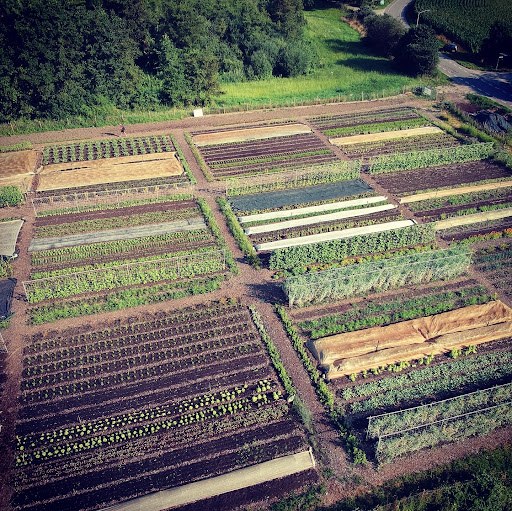
Gelukkige Groentes is a community-supported agriculture (CSA) initiative operating two food gardens where vegetables, herbs, and flowers are grown using nature-inclusive, regenerative methods. The focus is on local food production that contributes to CO2 reduction, biodiversity restoration, and the reduction of plastic waste and food waste. Members can self-pick a wide variety of seasonal produce directly from the fields.
Through a harvest subscription, members can pick their own vegetables, herbs, flowers, and small fruits from May through December. Over 60 different types of vegetables are cultivated throughout the season, alongside a variety of herbs and edible flowers. Typical produce includes familiar options like leeks, onions, carrots, and zucchini, as well as lesser-known varieties such as hakurei turnips and tromboncino squash. Herbs like oregano, coriander, and dill are also available. The farm operates two locations: one in Malden and one in Ooij.
The gardens are open to subscription holders 7 days a week, from sunrise to sunset during the picking season. The initiative also offers vegetable gardening courses, workshops, team-building outings, and seasonal plant markets where members can purchase plant starters for their own gardens. A business directory listing notes the farm has an operational status and a high rating.
What visitors say
This self-picking farm consistently garners high praise for its exceptionally fresh and delicious organic vegetables, with customers often describing the experience of harvesting their own produce as a “real richness.” Many consider it the best and healthiest choice for obtaining local, fresh vegetables in the Nijmegen area.
The venture is spearheaded by motivated pioneers who have developed a circular organic garden complex. Beyond offering direct access to abundant produce – which subscribers can enjoy for at least eight months annually – the farm also hosts educational workshops on its mission, sometimes in collaboration with partners like ‘Grootstal,’ and demonstrates a commitment to inclusivity, for instance, by accommodating hearing-impaired participants. The location occasionally transforms to host special events, such as pop-up restaurants, enhancing the overall visitor experience. Reviewers uniformly commend the “good concept” and the “wonderful garden,” expressing wishes for its continued success.