
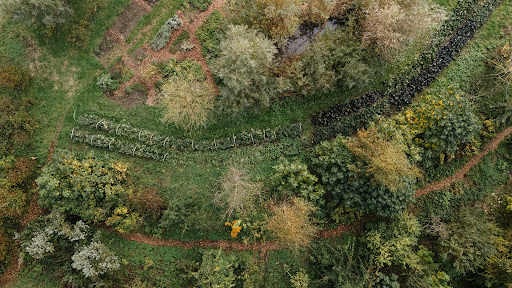
Stadstuinderij NoordOogst in Amsterdam is a pick-your-own vegetable garden where members harvest their own organic produce each week. The farm grows a wide variety of vegetables, fruit, and herbs on 4,000 square metres of cultivated land, alongside a 2,000-square-metre food forest. Crops include potatoes, strawberries, aubergines, spinach, kale, beans, beets, courgettes, and many others, as well as flowers at certain times in the season. The food forest produces fruits like blackberries, raspberries, and apples, along with nuts and unusual crops such as pawpaws and Szechuan pepper.
The season runs for about 30 weeks, from April to late November, with the largest harvests in peak summer. Members can visit any day of the week from sunrise to sunset to pick what they need. A weekly newsletter and signs at the farm indicate which crops are ready for harvest, marked by coloured flags: green for plentiful produce, red for limited availability, and orange when there is a surplus. You bring your own containers and cutting tools, and harvest according to your household’s needs.
Membership is required and covers the entire season. There are three pricing options: a standard rate of €12.50 per week for adults, a solidarity rate of €16.50 to support lower-income members, and a discounted rate of €6.25 for those with limited budgets. Children under 12 pick for free, while those aged 12 to 18 pay €3.13 per week. The farm operates on a Community Supported Agriculture (CSA) model, where members pay upfront at the start of the season, sharing both the risks and rewards of the harvest.
The farm also hosts workshops on topics like composting, permaculture, and growing your own seedlings, as well as educational activities for children. There is a community composting point for local residents, and occasional harvest dinners where visitors can cook and eat together. Parking is available nearby.
What visitors say
Visitors come for the mix of allotments and larger-scale planting at Stads Tuinderij Noordoogst, a city farming project running for about a decade on clean soil. The place feels welcoming and a little undiscovered—some describe the terrain as still a bit messy, which adds to its charm as you wander and spot what’s growing. There’s a friendly, helpful vibe, with staff happy to guide you, and small plants for sale if you want to take something home.
Picking is straightforward, though the setup is more about seasonal produce than rows of a single crop. Membership schemes are available for regular vegetable supplies, and workshops—like lactofermentation—run occasionally. A few mention it’s great for kids, though there’s no dedicated play area. Prices aren’t a sticking point, but neither are they a highlight. The main draw is the atmosphere and the chance to see urban farming in action.