
Tuinpark Laakzijde is a community garden and park located in Amersfoort-Vathorst, focused on ecological gardening, biodiversity, and providing a space for meeting and education. The park is open 24 hours a day, every day of the week, welcoming visitors to its various green spaces and activities. It is also suitable for children and allows dogs.
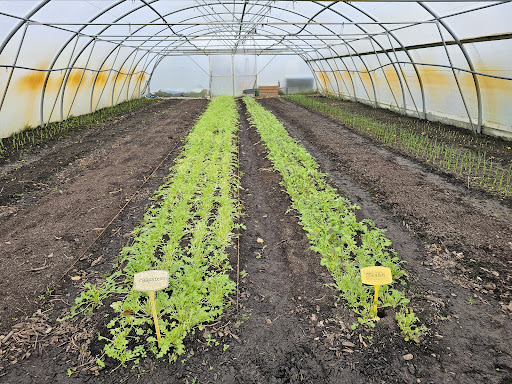
Visitors can self-pick produce through the ‘Zelfoogsttuin’ (self-harvest garden), run by the social enterprise Land in Zicht. The self-harvest season runs from the beginning of May to mid-December (approximately 32 weeks, depending on the weather). By purchasing an ‘oogstdeel’ (harvest share), you can visit the tuinderij (market garden) weekly to pull your own vegetables. The garden grows around fifty different crops. The season starts with raapstelen (leafy turnip tops), spinach, and broad beans. Summer offers tomatoes, beans, and courgettes, while autumn brings kale, celeriac, and pumpkins.
In addition to the self-harvest garden, there is a flower-picking garden (Bloemenpluktuin) open from mid-June to mid-October, where visitors can pick sunflowers, dahlias, zinnias, and other summer flowers. The park also features a Voedselbos (food forest) of 6000m2, where visitors can eat fruit while walking along the public paths but are asked not to take harvests home. Seasonal fruit and berries from the food forest are available for purchase.
What visitors say
Tuinpark Laakzijde is highly regarded as a beautiful and inviting natural retreat, particularly praised for its idyllic setting by the Laak river, which some compare to the tranquil French countryside. Visitors enjoy the opportunity to connect with nature through walks and bird spotting, and many commend the site as a promising and well-maintained developing area with a clear, loving mission.
A central feature is the self-picking garden concept, where members can subscribe to weekly harvests of fresh, unsprayed, and seasonal vegetables. This unique experience, which also includes flower picking, introduces people to unfamiliar produce and fosters a strong sense of community. The complex encompasses a food forest, allotment gardens, and extensive greenhouses filled with various plants, flowers, and herbs. It also hosts family-friendly events, like spring festivals with children’s activities, and offers volunteer opportunities. A cafe or teahouse is available, serving coffee, tea, and small menus, providing a pleasant stop for many, making a visit feel like a special outing.
While the overall sentiment is overwhelmingly positive, some areas for improvement have been noted. Parking space is described as limited. There are also recurrent concerns regarding dogs; some visitors find it problematic that dogs are allowed in vegetable growing areas due to hygiene concerns, and others report issues with too many off-leash dogs, leading to waste in restricted areas and owners disregarding rules, including instances of dogs harassing swans. One specific dog walking area was also mentioned as being muddy and could benefit from being larger. Despite these points, the enthusiasm for the park’s continued growth and its offerings remains high.